

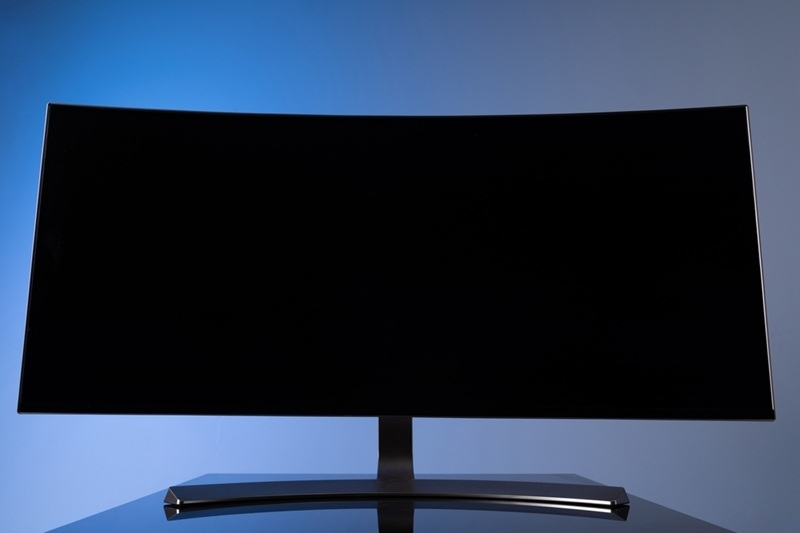
Choosing between curved and flat monitors can be difficult for most people when selecting a monitor for work, gaming, or video. By learning about the advantages and disadvantages of each monitor type and comparing gaming monitors, you'll feel confident in making the right choice. This monitor buying guide will provide all the information you need to find the perfect monitor.
Flat and curved monitors each have their own benefits, depending on the application, the layout of one's workspace, and the viewer's motion perception during use. Flat and curved monitors are very different, and the features of each type create distinct levels of comfort, performance, and visual perception.
Some unique aspects of curved monitors are that they are built to match the natural curve of the human-eye, thereby creating a more immersive viewing experience when using a wide monitor.
The main benefit of curved monitors is that they decrease eye strain because of the curvature of the screen surrounding your natural line of sight, so you won't need to change the angle at which you are looking across the screen as you scan across the monitor.
Curved monitors are also often discussed in gaming monitor comparisons as a solid choice, especially for increasing your immersion while playing racing, simulation, and open-world video games.
Flat monitors are the most widely used and traditional type of monitor, commonly found in homes, offices, and on workstation desks.
Some of the main advantages of flat monitors include versatility and productivity when working on them (e.g., writing code, designing graphics, typing/editing documentation). When using flat monitors, it is very important to maintain a straight line and accurate geometric placement.
Additionally, in most monitor-buying guides, flat monitors are recommended for multi-monitor setups due to their easy alignment.
When comparing curved vs flat monitors for daily use, flat screens generally offer superior performance for spreadsheets, browsing, and content creation in the office. Nevertheless, curved monitors may still offer ergonomic benefits if you use an extremely wide screen for an extended period on a regular basis.
The question of whether to choose a flat or curved monitor is increasingly debated when looking into options for playing video games. Flat monitors also offer extra benefits over their curved counterparts, helping you make an informed decision on which style will work better for you and the type of game you play.
The most significant benefit of using a curved monitor while playing video games is that they create an immersive experience. Curved screens wrap around players, giving their gaming experience a more realistic feel.
An additional benefit of using a curved monitor while playing video games is that it will maintain a consistent viewing distance between you and the monitor. So, no matter where you're looking on the curved screen, the distance from your eye to either end will be the same.
While curved monitors may suit some gaming styles, many gamers may choose flat screens for competitive gaming. Flat screens offer a straightforward design for gamers, eliminating the possibility of visual distortion (as you may get with curved screens) and allowing them to see the true size/shape of what they are looking at.
The single greatest advantage flat-screen monitors have over curved monitors for competitive gaming is their precision. In fast-paced FPS-type games, a flat-screen monitor provides consistent geometry (regardless of how far away you are from it) and lets players/teams play as closely as possible to one another.
Many of the best esports players prefer flat monitors for the speed and precision they offer. Generally speaking, people who are going to purchase a monitor (for gaming) should base their decision on performance statistics and consult monitor recommendations and guidelines.
Explore This Topic: 5 Best Coffee Makers for Home Brewing Perfection
The performance specifications, regardless of whether a curved or flat monitor is selected, are the most important criteria. These include the refresh rate (144Hz or higher recommended for gaming), response time (1ms preferred), and resolution (1080p, 1440p, or 4K). The monitor comparison of the above factors should also always include a comparison of curved and flat screens.
When choosing a display, many factors are involved. In addition to whether you want a flat monitor or a curved monitor, you'll need to assess your personal use and your surrounding environment.
The Best Choice for Work and Productivity: Most flat screen monitors (non-curved) are best for professional use. Reasons flat monitors are best suited for work include accurate visual display and ease of use with multiple monitors.
If you do design work, spreadsheets, or programming, flat monitors are generally the best option according to a monitor buying guide.
The Best Choice for Entertainment/Media: Curved displays are ideal for entertainment devices. When you watch movies or stream video content, curved monitors offer a more immersive experience because they provide a more natural viewing angle than flat monitors.
The benefits of curved monitors are more apparent on larger displays and are great for your home entertainment setups.
Generally, flat monitors are less expensive and easier to mount on walls and desks. Curved monitors are slightly more expensive, but they offer greater comfort when viewing.
When choosing your next monitor, a good monitor buying guide will help you balance your budget with your work and leisure priorities.
When selecting a curved or flat display, consider these questions:
These questions will help you determine which monitor type best fits your needs.
Thought You’d Find This Useful: Apple iPhone 17 Reviews and Performance Overview Explained
Choosing between flat and curved monitors largely depends on your preference and how you plan to use the product. Curved monitors offer a more engaging experience and ergonomic benefits over time, while flat monitors provide a more precise image and other practical benefits. When making a decision, if you systematically compare the two types of displays using an accurate gaming monitor comparison, as well as by following an appropriate monitor buying guide, you will be able to choose the best display for your particular needs and will be able to improve both your productivity and enjoyment in everything you do.
Curved displays can provide added comfort due to reduced eye movement and an enhanced natural viewing angle. When performing work that requires precision, such as graphic design or spreadsheet data manipulation, flat monitors will likely be more accurate and usable in most common professional settings.
Although curved monitors can require slightly deeper desks due to their curvature, this could be a consideration for smaller workspaces. Most people who use larger display devices at home for gaming or multimedia greatly appreciate the immersive experiences they receive, despite the additional desk footprint.
Flat monitors can deliver a high-quality gaming experience as long as the gaming device has a high refresh rate and low response time. While these displays may not provide the same immersive experience as a curved monitor, they work well in competitive gaming, where precision, clarity, and consistent images are required.
Curved monitors are constructed to maintain a consistent viewing distance across the screen, thereby reducing eye strain. Whereas flat monitors can lead to greater eye movement, especially with larger displays. Eye comfort overall is affected more by proper brightness and contrast settings, taking breaks, and other contributing elements than by monitor type.
Curved and flat monitors typically last the same amount of time, primarily based on build quality and usage rather than monitor type. A reputable brand with good ventilation and that does not expose the monitor to prolonged high brightness will help both types of monitors last longer, regardless of shape/design.
This content was created by AI