

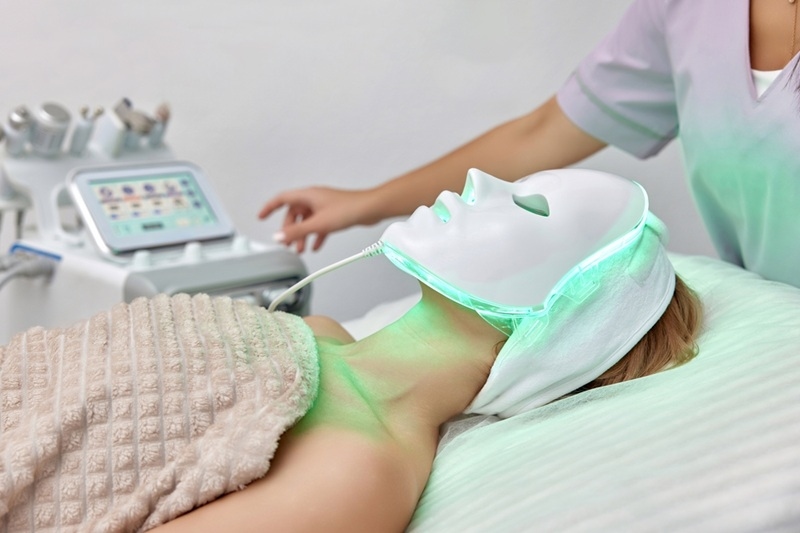
LED masks sit in an interesting skincare space. They promise visible results without needles, downtime, or complicated recovery, which is exactly why so many people keep circling back to them. The appeal is obvious. A person can sit at home, wear a mask for a few minutes, and feel like they are doing something genuinely treatment-based instead of simply layering creams and hoping for the best. That said, not every LED device deserves the same level of trust, and not every concern responds the same way to light therapy. The American Academy of Dermatology says red light therapy may help with signs of aging and acne, but it also points out that at-home devices are less powerful than what dermatologists use in office. Cleveland Clinic similarly says red LED light may reduce inflammation and stimulate collagen, while blue LED light may help destroy acne-causing bacteria.
That is the right lens for looking at Artemis. A good LED light therapy mask review should not ask whether light therapy works in theory alone. It should ask whether this specific mask has a strong feature set, whether its claims line up with what light therapy is actually known to do, and whether it looks like a sensible buy for someone’s real skincare goals.
This Artemis LED mask review refers to the Artemis system sold through ArtemisMask.com, which is different from the later Renpho Artemis soft mask that appears in some media coverage. On the official Artemis Mask product page, the company says the full face-and-neck system includes 720 LEDs for the face and 360 for the neck, app-based wireless customization, and up to 16 treatment zones that can be assigned different light colors. The listed wavelengths include near-infrared at 850nm, red at 635nm, blue at 470nm, green at 525nm, yellow at 590nm, and sky blue at 520nm. The company also says the face and neck pieces can be used together or separately.
That already gives Artemis a different personality from simpler masks. Many at-home devices stick to red, blue, and near-infrared only. Artemis is positioning itself more like a customizable treatment system than a basic red-light mask. That makes it an interesting skincare device review topic, because the pitch is not just “wear this and glow.” It is “adjust treatment by concern, zone, and color.” Whether that actually matters depends on how much someone values customization versus simplicity.
On paper, Artemis has some genuinely attractive strengths. The first is coverage. A face mask plus separate neck component gives it broader reach than many face-only devices, and that matters for users who care about the jawline, neck texture, or consistency between face and neck care. The second strength is flexibility. The official site says users can let AI suggest settings or manually customize zones through the app, which is unusual compared with more fixed masks that offer only a few preset modes. The site also says the baseline factory setting is 10 minutes, though sessions are customizable and users are generally advised to start at least three times per week, with daily use up to 30 minutes if desired.
That means this could appeal to two types of buyer. One is the person who enjoys tech and wants more control. The other is someone trying to target multiple concerns at once, such as breakouts in one area and aging concerns in another. For an anti aging LED mask shopper who also wants more than one standard light mode, Artemis has a more ambitious setup than many competitors.
Broadly, yes, but with the usual caution. The light choices Artemis lists line up with wavelengths commonly discussed in cosmetic LED therapy. The American Academy of Dermatology says red light therapy may help with signs of aging and acne, while Cleveland Clinic notes that red light may support collagen and inflammation reduction, and blue light may help with acne-causing bacteria. Harvard Health also notes that blue light is most often used for acne and that red plus blue can be used together, though the evidence is still evolving and not every skin issue responds dramatically.
That matters because the mask’s red, blue, and near-infrared setup is not random. It fits the current logic behind what people expect from an acne treatment LED mask review or from an aging-focused home device. Where caution is needed is in assuming that every extra color automatically adds strong clinical value. Red, blue, and near-infrared are the most familiar and evidence-backed parts of the conversation. The added green, yellow, and sky blue settings may be interesting, but the strongest mainstream support still tends to cluster around the core red, blue, and NIR discussion.
On a Similar Note: Portable Dishwasher vs Built-In In Which Should You Buy
This is where honesty matters. If someone buys Artemis expecting a dramatic transformation in two weeks, they are likely setting themselves up for disappointment. Even the brand’s own site leans heavily on consistency. One dermatologist quote on the Artemis product page says long-term, consistent use is more likely to lead to better results, and customer testimonials repeatedly describe changes after extended use rather than immediate payoff. The official review section includes user reports of reduced acne scars, better texture, more glow, and improved neck appearance, but those are still brand-hosted testimonials, not independent clinical trials on this exact device.
That is an important distinction in any skincare device review. The science around LED therapy in general is promising. The proof around this exact mask is more testimonial-driven in the public materials I found. So the fairest answer is this: it probably can help the right user, especially with consistency, but it should be viewed as a supportive treatment rather than a miracle fix. That is especially true for acne, since the AAD says light treatments can reduce acne, but rarely clear it on their own.
Artemis looks best suited to users who are patient, routine-driven, and interested in a higher-end customizable home device. Someone who wants to treat face and neck together, enjoys app-based control, and is willing to use the mask for months rather than days is probably the ideal customer. It also makes more sense for someone with broad goals like texture, mild breakouts, tone, and early aging concerns, not just one urgent issue.
This is where it starts to stand out in an LED light therapy mask review context. Many masks are designed for convenience first. Artemis seems designed for customization first. That can be a real benefit, but only for the kind of user who will actually use those options instead of defaulting to one routine and ignoring the rest.
The biggest caution is not that Artemis looks bad. It is that it looks like a commitment. The system is more involved, more expensive-looking, and more treatment-oriented than a simple throw-it-on device. People who want easy, mindless use may end up underusing it. People who are sensitive to tech complexity may not care about app zoning as much as they think. And anyone expecting in-office-style results from a home device should remember what the AAD says plainly: at-home red light devices are less powerful than dermatologist-offered treatments.
It is also worth paying attention to the brand’s own safety guidance. Artemis says the device should be used with caution around certain eye conditions and photosensitivity concerns, and that users should consult a doctor before treatment. That is standard for this category, but it matters. Good anti aging LED mask shopping still includes reading the warnings, not just the before-and-after claims.
Related Resource: Apple iPhone 17 Reviews and Performance Overview Explained
So, does it really work for skincare? The most honest answer is yes, it likely can, but in a realistic LED-mask way rather than a dramatic overnight way. The official Artemis system offers strong coverage, a separate neck piece, detailed zone control, and wavelengths that make sense for common LED use cases. The broader science around red, blue, and near-infrared light supports why someone would use a mask like this for acne, inflammation, and visible aging concerns. But the public-facing proof around Artemis itself leans more on brand-hosted reviews and product claims than on widely visible independent trials specific to this exact device.
That makes this a promising but commitment-heavy option. For someone who wants a customizable home LED system and is willing to be consistent, Artemis looks like a credible contender. For someone who wants a low-effort, one-button routine, it may be more mask than they actually need. In other words, this acne treatment LED mask review lands in a sensible middle ground: the device appears thoughtfully designed and potentially useful, but the results still depend on patience, expectations, and how faithfully it gets used over time.
The brand itself frames the mask as something that works best with consistent use over time, not as a quick-fix device. On the official site, baseline treatment is set at 10 minutes, and the company generally recommends starting at least three times per week, with daily use up to 30 minutes if desired. That suggests the right mindset is gradual improvement over weeks or months rather than immediate visible change after a handful of sessions.
It appears designed to address both, which is part of its appeal. Artemis lists red, blue, and near-infrared among its core wavelengths, and that aligns with the general LED evidence base where blue is often discussed for acne-causing bacteria and red or near-infrared for inflammation and visible aging support. The stronger answer depends on the user’s main concern, but the mask’s multi-zone design suggests it is aiming to handle mixed skin issues rather than only one.
Not exactly. The general science behind LED therapy is real enough to take seriously, especially for acne and mild aging concerns, but the AAD also says at-home devices are less powerful than the red light therapy used by dermatologists. With Artemis specifically, the product pages and review pages provide specs, dermatologist quotes, and customer testimonials, but the public-facing materials I found do not show the same level of independent clinical evidence on this exact mask that some buyers might expect from a medical-style claim.
This content was created by AI